UNESA Campus 5 Creates a Safe Space for Students: PKKMB 2026 Introduces Support and Counseling Services
SDGs 5 - Gender Equality
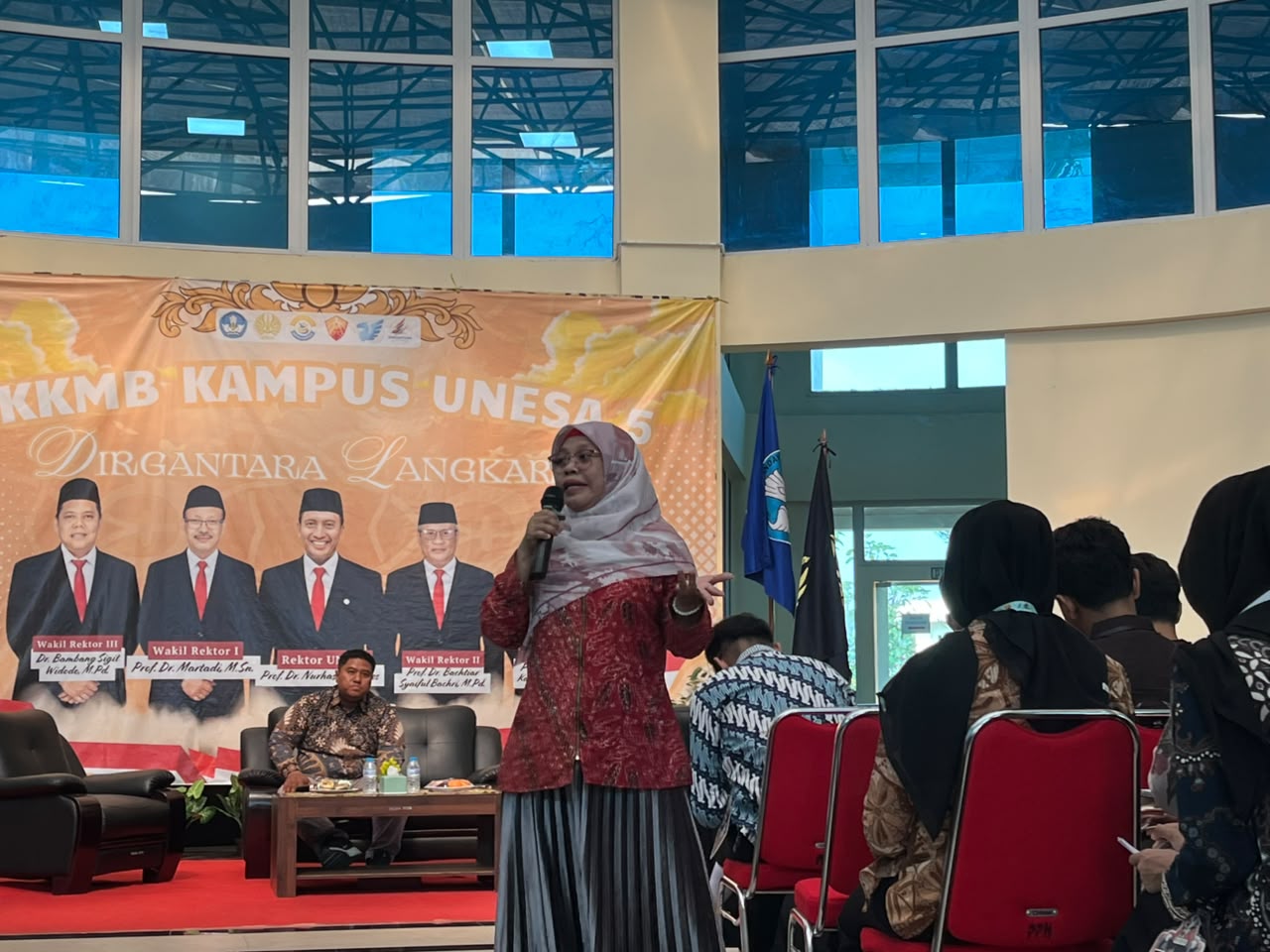
Campus UNESA 5, August 19, 2026 — Starting university brings a series of new experiences for students: a new academic environment, new friendships, greater responsibilities, and the challenge of adapting to campus life. Amid these transitions, students need not only classrooms and academic facilities, but also safe spaces where they can speak up, seek support, and ask for help when facing difficulties.
This message was highlighted during the 2026 Introduction to Campus Life for New Students (PKKMB) at Universitas Negeri Surabaya (UNESA) Campus 5 Magetan) through a session on violence prevention and response in higher education.
The session featured Prof. Dr. Mutimmatul Faidah, S.Ag., M.Ag. as the speaker, with Dr. Bakhrudin All Habsy, M.Pd. serving as the moderator.
Rather than simply introducing students to different forms of violence, the session also emphasized that students have access to institutional support and assistance when they encounter situations that threaten their safety, dignity, or well-being.
A Safe Campus Must Provide Space to Speak Up
A healthy educational environment is about more than classrooms and academic facilities. Students also need spaces where they can express concerns, seek advice, and ask for assistance when they experience uncomfortable or harmful situations.
During the session, new students were introduced to six forms of violence that may occur in educational settings: physical violence, psychological violence, bullying, sexual violence, discrimination and intolerance, and policies containing elements of violence.

Understanding these forms of violence is an important first step in preventing harmful behaviors from becoming normalized in campus life.
Students were also encouraged to recognize that sexual violence does not necessarily involve physical contact. It may occur through verbal remarks, jokes, the distribution of inappropriate content, personal messages, and digital communication.
This awareness is particularly important as students increasingly interact through social media and digital platforms.
Victims Should Not Have to Face Violence Alone
One of the most important discussions during the session emerged from a student's question about what happens after a report is submitted.
A student asked how the UNESA Task Force for the Prevention and Handling of Violence (Satgas PPK) responds to bullying cases and, most importantly, whether victims and reporting parties would receive protection.
The session explained that Satgas PPK UNESA provides protection for victims and reporting parties, while alleged perpetrators are handled in accordance with applicable procedures and regulations.
Students can submit reports through the designated Google Form (GForm). The reporting mechanism is accompanied by appropriate follow-up, including psychological support for victims.
This approach is important in creating confidence among students that seeking help is not something they need to fear or feel ashamed of.
Support Is Available Close to Students
UNESA also provides a range of support mechanisms that allow students to seek assistance in ways that feel accessible and appropriate to their circumstances.
One of these is peer counseling, which provides students with an opportunity to share their concerns and receive initial support from fellow students in a supportive environment.
For students at UNESA Campus 5 Magetan, counseling support is also available locally.
UNESA Campus 5 provides a dedicated counseling room that students can use when they need a safe space to consult, talk through personal or academic concerns, or seek further assistance.
Students therefore do not necessarily need to travel to UNESA's main campus in Surabaya to access counseling support.
Prevention Begins with Awareness
While institutional support is essential, prevention also depends on the everyday actions of students themselves.
During the session, students were encouraged to build healthy relationships based on mutual respect, appreciation, effective communication, and awareness of personal boundaries.
They were also introduced to key principles of digital ethics, including respecting others, protecting privacy, taking responsibility for one's actions, and recognizing that digital footprints can be permanent.
These principles are increasingly relevant as communication among students extends beyond physical campus spaces into WhatsApp groups, social media, and other digital platforms.
A discussion involving Sasa, a student from the Law Program, further highlighted this issue when she raised a case that had previously attracted public attention involving alleged harassment through a university WhatsApp group.
The discussion served as a reminder that digital spaces are not free from ethical responsibilities. Messages, jokes, images, and other forms of digital content can have real consequences for other people.
Building an Inclusive Campus Ecosystem
The availability of counseling services, reporting mechanisms, psychological support, and preventive education forms part of UNESA's broader commitment to creating a campus environment where students can learn and grow safely.
This commitment is closely aligned with the United Nations Sustainable Development Goals (SDGs), particularly SDG 4: Quality Education, which emphasizes inclusive and safe learning environments; SDG 5: Gender Equality, through efforts to prevent sexual violence and promote respect and equality; SDG 10: Reduced Inequalities, through the prevention of discrimination and intolerance; and SDG 16: Peace, Justice and Strong Institutions, through accountable reporting, protection, and response mechanisms.
Through PKKMB 2026, UNESA Campus 5 Magetan is sending an important message to its new students: university life is not only about studying and achieving academic success. It is also about learning how to respect others, protect personal boundaries, recognize harmful behavior, and seek help when necessary.
Ultimately, a safe campus is built not only through policies and facilities, but through a culture in which every student knows that they have the right to feel safe, the courage to speak up, and access to people and services ready to support them. Source: https://kampusunesamagetan.unesa.ac.id/post/unesa-campus-5-creates-a-safe-space-for-students-pkkmb-2026-introduces-support-and-counseling-services
Share It On: